

What can the journeys of Adani, Wipro and Bharti teach an entrepreneur trying to build something larger? Growth is not simply a matter of selling more, employing more people or entering new markets. It requires a business to develop capabilities, financial strength and institutional structures that may be very different from those that allowed it to survive in the beginning.
In my earlier essay, The Economics of Being Small, I examined a difficulty that many entrepreneurs eventually encounter. A business may be profitable, have a dependable customer base and operate successfully for years, yet find that moving beyond its existing size is unexpectedly difficult. The economics that support a small enterprise do not always support a larger one. More sales demand more working capital, additional employees require management systems, and new markets introduce costs that were absent when the business operated locally.
There is, however, another side to this discussion that I think deserves equal attention.
If the difficulties of growing are so substantial, how do some enterprises overcome them? How does a modest trading operation become a diversified industrial group? How does a manufacturer of vegetable oil eventually become a global technology enterprise? How does a small bicycle-components business develop into an international telecommunications group?
India has produced several examples of such transformations. The Adani Group, Wipro and Bharti Enterprises represent three particularly interesting journeys, not because their businesses are identical, but because their development illustrates different ways in which entrepreneurial activity can evolve into something substantially larger than its original form.
I am cautious about presenting large conglomerates as models that every small entrepreneur should imitate. Their histories involve circumstances, capital, relationships, opportunities and economic conditions that cannot be reproduced simply through determination. There is also a tendency, when examining successful enterprises retrospectively, to make their development appear more orderly and inevitable than it actually was.
Nevertheless, there are useful lessons in understanding how these businesses moved from one stage to another.
The question is not how every entrepreneur can build the next Adani or Wipro. It is how an entrepreneur can begin building an enterprise that is capable of growing beyond its founder, its original market and eventually even its original business.
The first distinction: growth is not the same as scale
In everyday business conversations, we often use growth and scale interchangeably. A business increasing its annual revenue from ₹1 crore to ₹3 crore is growing. A manufacturer expanding from one production unit to three is growing. A retailer opening five additional outlets is also growing.
But none of these developments necessarily demonstrates that the business has achieved economies of scale.
Suppose a food-processing enterprise produces 10,000 units monthly with twenty employees. To increase production to 20,000 units, it hires another twenty employees, doubles its storage space and incurs proportionately higher transport and administrative expenses.
The business has grown, but its cost structure may remain largely unchanged. If revenue doubles while expenses also double, the enterprise has increased its size without substantially improving its economic efficiency.
Now imagine another enterprise that increases production from 10,000 to 20,000 units through better machinery utilisation, improved production scheduling, lower wastage and more efficient procurement. Its output doubles, but its operating expenses increase by only 60%.
That business has begun to experience economies of scale.
This distinction matters because sustainable expansion depends not merely on producing more but on improving the relationship between resources employed and economic value created.
There are circumstances in which expenses must initially rise faster than revenue. A company investing in a new factory or distribution network may experience a period of lower profitability before the investment begins generating returns. This does not automatically make the decision economically unsound.
The more important question is whether the investment creates a productive capability that can eventually support a larger volume of business at a competitive cost.
An entrepreneur should therefore be careful about treating turnover as the primary measure of progress. Turnover demonstrates commercial activity. It does not, by itself, demonstrate financial strength, productivity or institutional development.
I have increasingly come to believe that one of the earliest mistakes an ambitious entrepreneur can make is to confuse the appearance of expansion with the creation of economic capacity.
What Adani, Wipro and Bharti actually demonstrate
Consider three different beginnings.
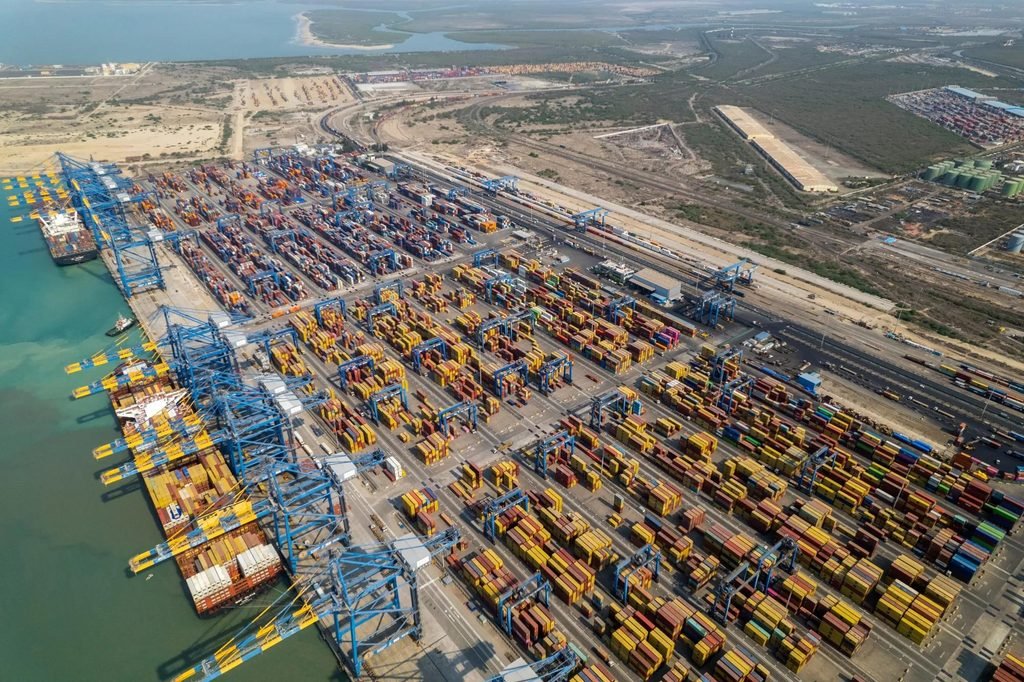
Source: Bloomberg News
Adani Group — From trading to infrastructure
Gautam Adani established Adani Exports in 1988. The enterprise began in commodity trading before expanding into port infrastructure, logistics, energy and other businesses. Its development around Mundra illustrates how commercial knowledge and infrastructure investment can reinforce one another. Adani Group ↗

Source: Glassdoor UK
Wipro — From manufacturing to technology
Established in 1945 as Western India Vegetable Products in Amalner, Maharashtra, Wipro moved from vegetable oil into consumer products, computing and eventually global IT services. Its journey demonstrates the importance of developing new organisational and technological capabilities. Wipro ↗

Source: Business Standard
Bharti Enterprises — From components to connectivity
Sunil Bharti Mittal began with bicycle-component manufacturing in 1976. Bharti subsequently entered trading, telecommunications equipment and mobile services, launching Airtel in Delhi in 1995. Its history offers lessons in recognising changing markets and building through partnerships. Bharti ↗
What interests me about these enterprises is that their eventual scale was not simply a larger version of their original activity.
Adani did not become a major infrastructure group merely by trading more commodities. Wipro did not become a global technology business by manufacturing greater quantities of vegetable oil. Bharti did not become a telecommunications enterprise by continuously expanding bicycle-component production.
At different stages, these organisations entered activities that required capabilities substantially different from those with which they began.
That distinction is fundamental.
A small enterprise seeking to become large must eventually decide whether its future lies in expanding the original business, moving into related activities or developing an entirely different economic capability.
These are not interchangeable strategies, and each carries different risks.
Scale begins with understanding what the enterprise already knows
The Adani journey offers an interesting starting point.
Commodity trading requires an understanding of sourcing, demand, prices, logistics, counterparties and the movement of goods. As volumes increase, the efficiency of transportation and infrastructure becomes commercially important.
The group’s subsequent development of Mundra and expansion into logistics and energy can be examined through the economics of related activities. Its official history records the movement from commodity trading into port development and subsequently into other infrastructure businesses. Adani Group ↗
The broader economic principle is that an enterprise may discover new opportunities through the constraints and requirements of its existing operations.
A trading business becomes familiar with transportation inefficiencies. A manufacturer understands its dependence on packaging suppliers. A food producer discovers the limitations of available cold storage. A distributor identifies gaps in regional warehousing.
These observations can reveal opportunities for vertical integration.
But identifying an opportunity does not necessarily justify investing in it.
A small food manufacturer experiencing high transport costs should not automatically purchase trucks. It must determine whether ownership would be more economical than contracting transportation services. Vehicle utilisation, maintenance, financing costs and operational complexity all matter.
Similarly, a business purchasing expensive packaging may consider manufacturing its own, but that decision makes sense only when sufficient demand exists to justify the investment and when the enterprise possesses, or can acquire, the required expertise.
Vertical integration can improve efficiency. It can also trap capital in activities that specialised external suppliers perform more effectively.
The lesson is not that every entrepreneur should own the entire value chain. It is that entrepreneurs should understand their value chains well enough to identify where ownership, partnerships or better contractual arrangements can create an enduring advantage.
There is another consideration. Large infrastructure businesses frequently involve substantial capital requirements, long investment horizons, regulation and concentrated risks. The Adani example therefore also illustrates why expansion into capital-intensive sectors requires financing and governance capabilities that differ sharply from those needed in trading.
An entrepreneur can learn from the logic of such expansion without copying its capital intensity.
Wipro and the willingness to change the business itself
Wipro offers a rather different lesson.
Its transformation from a vegetable-oil manufacturer into a global technology enterprise involved much more than diversification. The company entered an industry in which knowledge, technical expertise, organisational processes and human capital became central productive assets.
Wipro’s own corporate history traces its move into computing during the early 1980s, followed by software services in the 1990s. In 2013, the non-IT diversified businesses were separated into Wipro Enterprises, allowing Wipro Limited to concentrate on information technology. Wipro ↗
This history raises an important question for smaller businesses.
Should an entrepreneur remain committed to the product with which the enterprise began, or to the broader institution that the entrepreneur is attempting to build?
The two commitments are not always compatible.
A family-owned manufacturing business may have considerable emotional attachment to its original product. That attachment can be valuable. It preserves identity, relationships and knowledge accumulated over generations.
But markets change.
Technology alters production processes. Consumer preferences evolve. Distribution channels become more sophisticated. Entire industries may become less attractive as their margins decline or their competitive structures change.
A business that refuses to adapt because its original activity defines its identity may eventually find itself preserving tradition at the expense of economic relevance.
Equally, diversification merely because another sector appears profitable can be dangerous.
Wipro’s transformation required sustained investment in people, technical capabilities, customer relationships and systems. Its movement into technology cannot reasonably be reduced to a simple decision to enter a promising industry.
For a smaller entrepreneur, the more practical lesson is to distinguish between the capabilities an enterprise possesses and those it must develop before entering a new market.
A company experienced in processing agricultural produce may have transferable knowledge in procurement, quality control, packaging and distribution. That could support expansion into related food categories.
But entering software development, financial services or hospitality would involve a substantially different set of capabilities.
Diversification becomes more defensible when the enterprise understands precisely what knowledge it can transfer, what it must acquire and how much capital it can afford to place at risk.
The important achievement is not diversification itself. It is developing the organisational ability to undertake new activities without weakening the foundations of the existing business.
Bharti and the economics of partnerships
Bharti’s history illustrates another route.
Beginning with bicycle components, the group moved into trading and telecommunications equipment before entering mobile telecommunications. Its early development included technical collaborations with international companies, including Siemens, before the launch of Airtel. Bharti ↗
For an entrepreneur, this raises the question of whether growth requires possessing every capability internally.
In many cases, it does not.
A business may understand its market exceptionally well but lack manufacturing technology. Another may possess production expertise but have limited distribution access. A third may have a strong brand but insufficient capital to establish its own retail network.
Partnerships can allow enterprises to combine complementary resources.
A regional food manufacturer, for instance, may collaborate with an established distributor rather than developing an expensive independent distribution network. A small technology company may enter a larger market through a commercial alliance. An agricultural enterprise may contract specialist processing facilities instead of immediately investing in its own plant.
Such arrangements can reduce the capital required for expansion and allow the business to concentrate on capabilities where it has a competitive advantage.
However, partnerships introduce their own risks.
Dependence on a single distributor can weaken negotiating power. Technology partnerships may limit operational independence. Joint ventures can become difficult when partners disagree over investment priorities, management responsibilities or profit distribution.
An entrepreneur must therefore evaluate partnerships not only by the immediate opportunity they provide but also by the long-term economic relationships they create.
The objective should be to gain access to capabilities without surrendering control over the essential direction of the enterprise.
Bharti’s history is also useful because its corporate description explicitly recognises the balance between entrepreneurial leadership and professional management. Bharti ↗
That balance becomes increasingly important as businesses grow.
The founder must eventually stop being the entire organisation
One of the greatest difficulties in scaling a small enterprise is that the qualities which make a founder effective in the beginning can become constraints later.
During the early years, the founder often handles almost everything. Purchasing, sales, staffing, negotiations, production and financial decisions may all pass through one person.
This arrangement can be surprisingly efficient.
Decisions are quick. Communication is direct. The founder understands the details of the business and can respond immediately when something goes wrong.
But as the enterprise expands, the same arrangement begins creating delays.
Employees wait for approvals. Managers hesitate to exercise judgement. Customers expect the founder’s personal involvement. Important decisions accumulate faster than one person can reasonably process them.
The business may have forty employees, yet continue operating as though it has only one decision-maker.
I find this particularly relevant to enterprises that begin in smaller towns and commercial centres.
In such environments, entrepreneurs may not have immediate access to experienced professional managers. Recruitment itself can be difficult, and the people who join the business may need substantial training before they can assume independent responsibility.
The temptation is to continue managing everything personally because delegation initially appears less efficient.
But the entrepreneur must distinguish between the immediate cost of developing people and the longer-term cost of never developing them.
A growing enterprise needs employees who understand not only what they are supposed to do but why particular systems and standards exist.
That understanding takes time.
People who have spent years working through informal arrangements may not immediately adapt to documented procedures, performance measures or delegated authority. Some may resist changes that appear unnecessary to them.
The solution is not always to replace them with supposedly better talent.
Often, it is to invest patiently in building competence, confidence and a shared understanding of the enterprise’s future.
Professionalisation should not mean removing the human relationships that helped the business survive. It should mean creating an organisation in which those relationships are supported by clearer responsibilities and more reliable processes.
An institution begins emerging when the enterprise can function competently even when its founder is not personally supervising every activity.
Capital must follow a sequence, not merely an ambition
Growth requires money, but the type of capital matters as much as the amount.
A small enterprise may finance its original operations through personal savings, family resources, retained profits or relatively modest bank borrowing.
These sources may be sufficient for its initial stage.
Expansion introduces different financial requirements.
Working capital is needed to finance inventory and customer credit. Machinery and facilities require longer-term investment. Market development involves expenditure that may not produce immediate returns. New businesses can require capital for several years before becoming self-sustaining.
Using the wrong financial instrument for a particular requirement can create serious difficulties.
Financing long-term machinery through short-term borrowing may place repayment pressure on the business before the investment generates adequate cash flow. Conversely, raising permanent equity merely to finance a temporary inventory requirement may unnecessarily dilute ownership.
The entrepreneur must match the financing structure to the economic life of the investment.
There is also a distinction between borrowing capacity and repayment capacity.
A bank may be willing to finance a project because the entrepreneur possesses collateral. That does not necessarily mean the proposed expansion can generate sufficient cash to service the debt.
The proper question is whether the project can repay its obligations from reasonably expected operating cash flows, including under less favourable conditions.
I would go further and suggest that entrepreneurs should evaluate expansion under three possible outcomes: the expected case, a slower-growth case and an adverse case.
What happens if sales take eighteen months rather than six months to develop? What if raw-material prices increase? What if a major customer delays payment? What if a newly installed facility operates at half its expected capacity?
An investment that appears attractive only under optimistic assumptions may be more speculative than the entrepreneur realises.
This does not mean avoiding risk. Entrepreneurship necessarily involves uncertainty.
It means recognising that the survival of the existing enterprise should not automatically be placed at risk to finance every new opportunity.
The discipline of capital allocation is one of the most important differences between an enterprise that grows sustainably and one that repeatedly expands without developing financial resilience.
Scale should be built around repeatability
A small business may achieve commercial success because its founder possesses exceptional knowledge, personal relationships or technical skill.
But can that success be reproduced?
A restaurant that performs well because its owner personally supervises every meal may struggle when it opens a second outlet. A food manufacturer whose quality depends on one experienced employee may face inconsistency when production increases. A distributor relying on informal credit arrangements may find that those arrangements cannot support a wider network.
The question is whether the underlying business model is repeatable.
Repeatability requires more than written operating procedures.
It involves standardising those activities where consistency matters while retaining flexibility where judgement is valuable.
Product specifications, quality standards, financial reporting, procurement controls and customer-service expectations should not change unpredictably whenever the enterprise expands.
At the same time, different markets may require adaptations in pricing, distribution or product selection.
A scalable business must know what should remain consistent and what can be adapted.
This is why I would generally favour testing a new market or operating format before committing to extensive expansion.
A business seeking national distribution does not necessarily need to enter twenty states simultaneously. It may begin with two or three markets, establish the economics of distribution, understand consumer response and refine its operating systems.
The same principle applies to manufacturing capacity.
Instead of immediately constructing a facility designed for projected demand five years into the future, an entrepreneur may be better served by modular investments that allow capacity to increase as demand becomes more predictable.
The ideal sequence will vary by industry. Some sectors require large minimum investments before production becomes economical. Others permit incremental expansion.
But the principle remains useful: wherever possible, growth should generate information before it demands irreversible commitments.
Why distribution can matter more than production
Entrepreneurs often concentrate on improving the product they manufacture.
This is understandable. Production is visible, measurable and usually within the entrepreneur’s direct control.
But producing something well is not the same as creating a commercially scalable business.
An enterprise may manufacture an excellent product yet lack the distribution capacity required to reach customers consistently.
For businesses operating in Northeast India, this distinction is particularly significant.
A product manufactured in Assam or Arunachal Pradesh may be competitive within its immediate market but encounter substantial additional costs when transported to Delhi, Mumbai or Bengaluru.
Freight, warehousing, distributor margins, retailer margins, product damage, returns and promotional expenses can substantially change its economics.
The entrepreneur must calculate profitability at the point where the product is actually sold, not merely at the factory gate.
This can lead to difficult decisions.
Should the enterprise establish its own distribution network, appoint regional distributors, sell directly through digital channels or supply larger businesses under contractual arrangements?
There is no universally superior model.
Direct selling may offer better gross margins but require expenditure on customer acquisition, fulfilment and service. Traditional distribution may provide market access but reduce margins and create receivables. Institutional supply contracts may offer predictable volumes but increase dependence on a few buyers.
A growing enterprise must understand these trade-offs before expanding.
In some industries, developing distribution capabilities may create greater long-term value than adding manufacturing capacity.
The business that controls access to customers can sometimes possess a stronger competitive position than the business that merely produces the goods.
The temptation to diversify too early
There is a particular danger in studying successful conglomerates.
We observe their present-day range of businesses and conclude that diversification must be the route to growth.
But this confuses the outcome with the process.
A conglomerate may operate across several industries because it has accumulated capital, managerial capacity, commercial relationships and experience over decades.
A small enterprise attempting to enter five unrelated sectors simultaneously does not possess those advantages merely because it adopts a group structure.
Each new activity introduces management demands, financial exposure and operational uncertainty.
If the founder remains the central decision-maker across all businesses, diversification can multiply complexity faster than it creates value.
This is especially dangerous when profitable activities are expected to finance businesses whose commercial viability remains unproven.
Cross-subsidisation can be justified during a planned investment period. But without clear limits, a successful business can become a permanent source of funding for ventures that never develop economic independence.
A useful discipline is to distinguish between three types of expansion.
The first strengthens the existing business. This might involve improving machinery, developing distribution or entering a neighbouring geographic market.
The second creates an adjacent business that can benefit from existing capabilities. A food manufacturer entering a related product category may fall into this category.
The third enters an unrelated sector requiring substantially new capabilities. Each step introduces a different level of uncertainty.
An entrepreneur should not assume that success in the first category automatically qualifies the organisation to undertake the third.
Diversification becomes more credible when the enterprise possesses a management structure capable of evaluating and supervising each business independently.
Building the institution before building the conglomerate
There is an organisational distinction between owning several businesses and governing a group of enterprises.
An entrepreneur may establish multiple companies, appoint directors and create separate brands. Legally, these may be distinct entities.
But if every significant decision still depends on the founder, the structure has not necessarily produced institutional capacity.
A genuine enterprise group requires a framework for allocating capital, evaluating performance, managing risk and establishing accountability.
Different businesses may need different management teams and operating strategies. Yet the group must possess a common understanding of financial discipline, governance and long-term objectives.
This does not require a small entrepreneur to establish an elaborate corporate bureaucracy.
Indeed, excessive administrative structures can burden a young business with costs it cannot justify.
Institutional development should be proportionate to the scale and complexity of operations.
At an early stage, it may involve nothing more elaborate than reliable accounting, clear authority limits, documented responsibilities, regular management reviews and a disciplined separation between personal and business finances.
As the enterprise expands, these arrangements may evolve into formal boards, internal controls, independent audits and professional management structures.
The underlying purpose remains the same.
The organisation should be able to make decisions based on evidence and accountability rather than depending entirely on the founder’s personal judgement.
That transition can be uncomfortable because it requires entrepreneurs to accept that building something enduring may involve surrendering some of the direct control they once exercised.
But an enterprise that cannot function without its founder has an obvious limit to its scale.
What public policy can and cannot do
India has placed considerable emphasis on supporting micro, small and medium enterprises.
One relevant development is the revision of MSME classification thresholds effective from 1 April 2025. Under the revised criteria, a small enterprise may have investment in plant and machinery or equipment of up to ₹25 crore and turnover of up to ₹100 crore, while the corresponding limits for a medium enterprise are ₹125 crore and ₹500 crore. Both investment and turnover conditions apply. PIB, GOI ↗
The policy intention includes allowing enterprises greater room to expand within the MSME framework.
That is useful, but classification changes alone cannot create productive scale.
An entrepreneur must still find customers, improve efficiency, finance expansion and develop managerial capacity.
Similarly, access to subsidised finance or government support may help overcome specific barriers, but these interventions cannot transform an economically weak business model into a strong one indefinitely.
Public policy should therefore be evaluated not only by the number of enterprises it supports but by whether it improves their capacity to become more productive.
For smaller businesses, reliable infrastructure, efficient logistics, predictable regulation, timely payments and access to skilled workers may be as important as direct financial assistance.
This is particularly relevant to geographically distant regions, where entrepreneurs face disadvantages that are not entirely within their control.
A commercially capable enterprise should not be prevented from entering larger markets simply because transport costs, fragmented infrastructure or limited access to specialised services make expansion disproportionately expensive.
At the same time, entrepreneurs cannot build their entire growth strategies around the expectation that public policy will compensate for every structural disadvantage.
A sound business model must ultimately demonstrate its ability to create value under realistic market conditions.
A practical sequence for the entrepreneur who wants to grow
If I were to reduce these observations to a practical sequence, I would begin not with a target turnover but with a series of decisions about the enterprise itself.
The first is to establish whether the original business is genuinely viable.
This means understanding margins, cash flows, customer concentration, operating costs and the return generated on capital employed. A business that survives because the founder contributes unpaid labour, repeatedly injects personal funds or postpones necessary expenditure may not be as profitable as its accounts suggest.
The second is to identify what currently limits growth.
Is the constraint production capacity, market access, finance, management, technology or demand? These problems require different solutions. Borrowing money to expand a factory will not solve a distribution problem. Hiring more salespeople will not necessarily improve a product that lacks competitive pricing.
The third is to invest in the capability that removes the most important constraint.
For one business, this may mean better machinery. For another, it may mean hiring an experienced operations manager. For a third, it may mean establishing a reliable distributor relationship.
The fourth is to test expansion before committing to it extensively.
A pilot market, additional production shift, limited product extension or carefully structured partnership can provide information that improves subsequent decisions.
The fifth is to preserve financial resilience.
Growth should not be financed on the assumption that every new customer will pay promptly or that every new market will develop according to plan. Working-capital requirements and the consequences of slower sales must be considered in advance.
The sixth is to develop people and systems alongside revenue.
If the business doubles its turnover while retaining the same dependence on its founder, it may simply have created a larger and more exhausting version of the original enterprise.
Finally, once the original business has developed reliable management and financial capacity, the entrepreneur can begin evaluating adjacent opportunities.
That is when diversification may become a strategic choice rather than a distraction.
This sequence is not a universal formula. Some opportunities require rapid investment, and some industries reward early scale. Entrepreneurs will occasionally need to act before all the information they would prefer is available.
But the sequence provides a useful discipline: strengthen the existing economic foundation before placing substantial new demands upon it.
The ambition to build something enduring
There is an understandable fascination with the stories of entrepreneurs who began with modest resources and eventually built major business groups.
Such stories can be encouraging, particularly for people beginning their enterprises far from established commercial centres.
But I think we sometimes draw the wrong lesson from them.
We celebrate the size of the eventual organisation while paying less attention to the capabilities accumulated along the way.
The Adani journey invites us to examine the relationship between commercial activity, infrastructure and capital. Wipro illustrates how an enterprise can develop entirely new capabilities and eventually redefine its principal business. Bharti demonstrates the value of recognising technological change, forming partnerships and combining entrepreneurial leadership with professional expertise.
None of these examples establishes that diversification always succeeds, that large enterprises are necessarily more efficient or that ambitious founders should pursue expansion regardless of risk.
Large organisations can make serious capital-allocation mistakes. They can become overextended, bureaucratic or vulnerable to changes in markets and regulation. Their size does not exempt them from economic discipline.
Nor should we overlook the importance of timing, access to capital, institutional relationships and favourable market conditions in their histories. Retrospective accounts of successful businesses inevitably contain an element of survivorship bias: we see the enterprises that succeeded more clearly than the many others that pursued ambitious strategies and failed.
For smaller entrepreneurs, the more useful question is therefore not how quickly a business can become large.
It is what kind of business must be built today to make sustainable expansion possible tomorrow.
An enterprise that can generate reliable cash flows, train its people, maintain product quality, serve customers consistently and make disciplined investment decisions already possesses important foundations for growth.
Those foundations may not attract the same attention as a new factory, an acquisition or an ambitious announcement about entering multiple industries.
But they determine whether expansion produces enduring value or merely additional complexity.
I have come to see institution-building as a process of gradually making the enterprise less dependent on the circumstances of its beginning.
It must become less dependent on the founder’s personal involvement in every transaction. Less dependent on a handful of customers. Less vulnerable to temporary cash-flow disruptions. More capable of developing people, entering markets and adapting when conditions change.
This does not happen through a single investment or strategic decision. It develops through years of accumulated judgement, sometimes through mistakes that become expensive lessons.
And perhaps that is the part of scaling we discuss too little.
We often ask entrepreneurs how large they want their businesses to become. We rarely ask what must change within those businesses for that ambition to become economically possible.
The distinction matters because an entrepreneur can increase revenue without improving productivity, add employees without building management capacity, and establish new companies without creating a functioning institution.
Growth can be purchased through expenditure. Sustainable scale must be supported by capabilities.
The small enterprise that aspires to become a large one should certainly be ambitious. But ambition must be accompanied by patience, financial discipline and the willingness to build systems that may initially appear unnecessary.
It must also be accompanied by a willingness to recognise when expansion is premature.
There will always be opportunities that look attractive from a distance. Not every opportunity belongs to the enterprise at its present stage of development.
The ability to distinguish between an opportunity worth pursuing now and one that should wait may be as important as the ability to recognise the opportunity itself.
Ultimately, the objective should not be to create a larger business merely for the sake of size.
It should be to build an enterprise capable of producing greater economic value, employing people productively, adapting to changing markets and sustaining itself beyond the immediate efforts of the person who established it.
That, to me, is the more meaningful interpretation of scale.
A small business becomes a larger business when its activities expand. It begins becoming an institution when its capabilities, systems and judgement develop sufficiently to sustain that expansion.
And if we want to understand how modest enterprises can one day become enduring business groups, that is where I believe we should begin.